Layered Lighting: A Room-by-Room Guide for Better Light
One ceiling light is a lighting plan the way one chair is a living room. Layering ambient, task, and accent light changes how a room feels at night.
Layered lighting means using more than one kind of light in a room, at more than one height, for more than one purpose. It is the difference between a room that is merely visible and a room that is comfortable to read in, cook in, and relax in after dark. The idea is simple; the execution is mostly about planning where the light comes from before the ceiling is finished.

The three layers
Ambient light is the general wash that lets you move safely. It can come from a ceiling fixture, recessed downlights, or a combination of floor and table lamps. Ambient light should be even, not theatrical.
Task light is concentrated where you work: the kitchen counter, the desk, the bathroom mirror, the reading chair. It should be bright enough to see detail and positioned so your body does not cast a shadow on the task.
Accent light is directional and decorative. It highlights a wall, a plant, a piece of art, or a texture. Accent light adds depth, and it is the layer that makes a room feel designed rather than lit.
Plan by room, not by fixture
Start with the tasks that happen in each room, then choose the light. A living room needs ambient light plus a reading lamp and perhaps a wash on one wall. A kitchen needs bright task light over the counter and softer light for the table. A bedroom needs low ambient light and a dedicated reading light on each side of the bed.
- Living room: ceiling or floor ambient, a floor lamp beside the sofa, a small accent light on a shelf.
- Kitchen: under-cabinet task strips, a pendant or two over an island, ambient ceiling light.
- soft ambient, adjustable reading lights, a low night light on the route to the door.
- even light at the mirror, general ceiling light, a warm night light.
- gentle ambient light with a switch at each end.
Colour temperature and bulbs
Colour temperature is measured in kelvin. Lower numbers are warmer and more yellow; higher numbers are cooler and bluer. A practical approach is to keep living areas warm, workspaces neutral, and bathrooms bright enough to see clearly.
- Warm white, around 2700 K: bedrooms, living rooms, lamps.
- Neutral white, around 3000 to 4000 K: kitchens, bathrooms, task lighting.
- Cool white, 5000 K and above: utility areas, garages, detailed work.
Match the colour temperature within a room. A warm lamp beside a cool ceiling light makes both look wrong. Also check the colour rendering index (CRI) on the packaging; a higher CRI makes skin tones and fabrics look natural.
Use daylight as the first layer
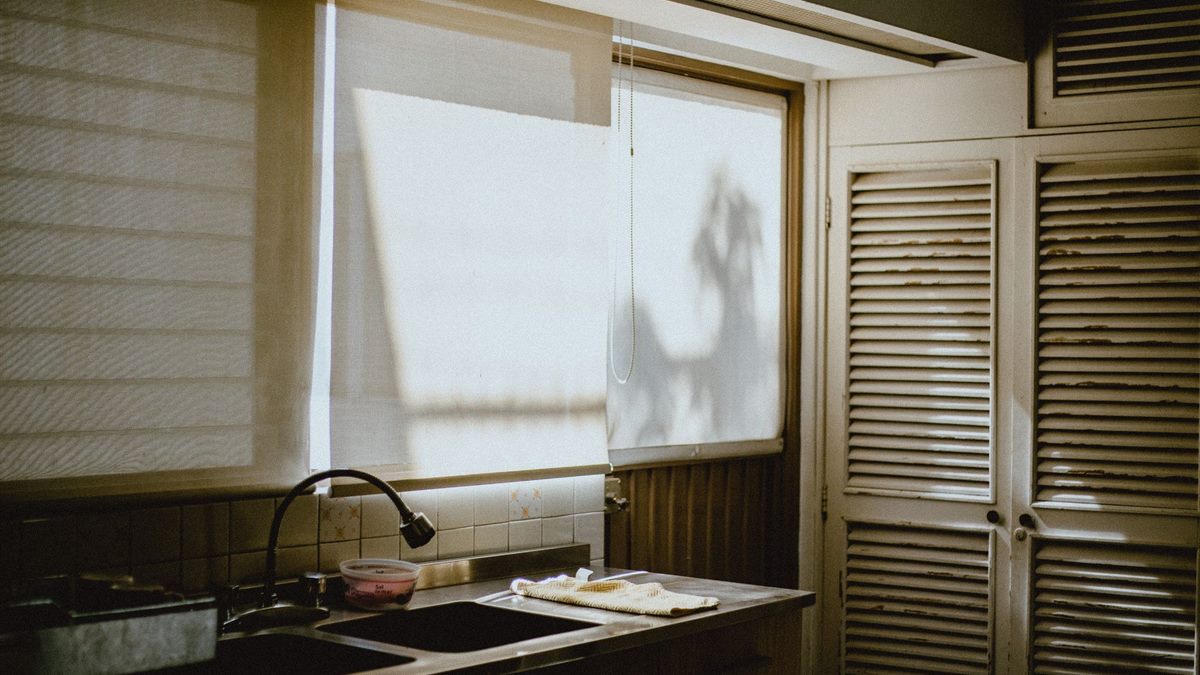
Before adding fixtures, look at what the sun already does. Sheer curtains diffuse harsh light, mirrors can bounce daylight into a dark corner, and light-coloured walls reflect it further. The colour of the walls changes how the artificial light reads, so choose the paint and the lamps together. Our guide to paint colours that make rooms look bigger explains how surface colour affects perceived brightness.
Switching and dimming
Lighting is easier to live with when it can change. Put the layers on separate switches so you can use task light without the ceiling light. Dimming is useful in living rooms and bedrooms, but not every bulb is dimmable, and not every dimmer works with every LED. Check compatibility before buying.
For a more comfortable evening, avoid a single bright ceiling light in the middle of the room. Two or three lower-output sources at different heights usually feel better and cast softer shadows.
Efficiency without a gloomy room
LEDs use far less energy than older bulbs for the same light output, and they last longer. Look for the lumen output rather than the wattage, because wattage only tells you how much power the bulb draws. The Energy.gov LED basics explains how to compare products.
Good lighting also matters when the power fails. Keep a battery lantern or a rechargeable light where you can find it in the dark, and know how to isolate sensitive equipment. Ready.gov guidance on power outages covers the safety basics.
Coordinate lighting with the layout
Light follows furniture. A reading chair needs light behind or beside it, not overhead. A sofa needs light for conversation and a separate light for someone reading at one end. Plan the lamps with the seating plan, not after it. Our small living room layout guide shows how to arrange the furniture so the light has somewhere to land.
The test of a layered scheme is simple: at night, can you read, eat, cross the room, and relax without moving a lamp? If yes, the layers are working.
Frequently Asked Questions
What are the three types of lighting layers?
Ambient light provides general illumination, task light is focused on a specific activity, and accent light highlights a feature or adds depth. A comfortable room usually has all three.
What colour temperature should living room lights be?
Around 2700 K is a common choice for living rooms because it feels warm and relaxing. Keep it consistent within the room and choose a high colour rendering index for natural-looking fabrics and skin tones.
Should I use dimmers on LED bulbs?
Only if both the bulb and the dimmer are rated as compatible. Many LEDs flicker or buzz on older dimmers, so check the packaging and test before installing a full circuit.
Is one ceiling light enough for a bedroom?
It is enough to see, but not enough to be comfortable. Add bedside reading lights on separate switches and a low light on the route to the door for a more usable room.